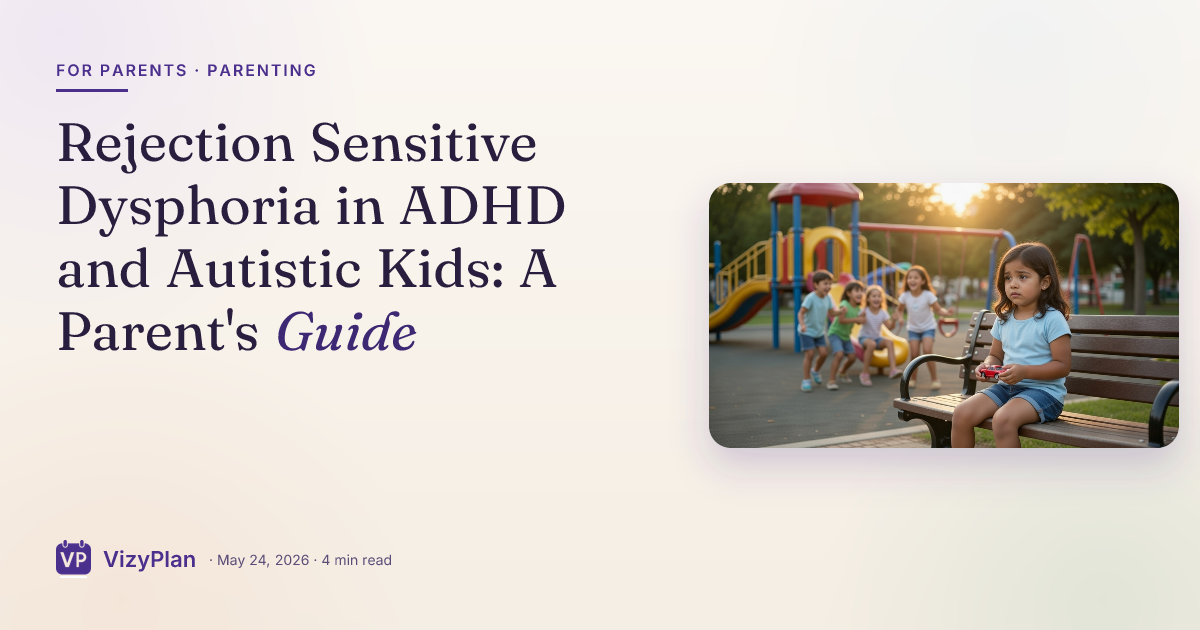
That tiny correction at the dinner table that sent your kid spiraling for an hour. That comment from a friend that turned the whole afternoon. That feedback from a coach that ended the entire activity. If you have wondered whether the response was disproportionate or just how your child experiences these moments, rejection sensitive dysphoria is the term you may be looking for. It is one of the most discussed concepts in ADHD parenting in the last several years, and the same pattern shows up in many autistic kids too.
What rejection sensitive dysphoria actually is
Rejection sensitive dysphoria, often called RSD, refers to extreme emotional sensitivity to perceived rejection, criticism, or failure. It is not a formal DSM diagnosis but is widely used clinically, particularly in ADHD care. The term was popularized by Dr. William Dodson, whose clinical work and writing in ADDitude Magazine brought the concept into mainstream parent vocabulary. Research on rejection sensitivity and ADHD (Bondu and Esser 2015) has documented elevated frustration responses and rejection sensitivity in this population.
RSD is not the child being dramatic. It is a nervous system that registers a small social or evaluative cue as a major threat, and responds at that intensity.
Why it shows up in autistic kids too
The autism research literature does not formally validate RSD as an autism-specific phenomenon, but the same pattern appears in many autistic children. Possible reasons include heightened emotional reactivity, alexithymia making the emotion harder to identify and contain, and a history of social misunderstandings that have trained the nervous system to expect rejection. The result for parents is the same: small events trigger big collapses.
Three patterns to watch for:
- Disproportionate response to mild correction. A reminder to wash hands triggers a 30-minute meltdown.
- Avoidance of activities where they might fail. New things stop being interesting once the risk of being wrong appears.
- Repeated reassurance seeking after social interactions. "Was that okay?" hours after a normal interaction.
Enjoying this article?
Get practical tips and insights delivered to your inbox — no spam, ever.
What helps without dismissing the experience
The most effective parent moves do not involve trying to talk the child out of the feeling. They involve preparing the nervous system in advance and validating the experience as it lands.
Predict the rough spots. Before a coaching session, a group activity, or a tricky family event, walk through what feedback might sound like and what the child can do with it.
Name the feeling without minimizing it. "Your brain is reading that as rejection. That is a real feeling. We can sit with it for a minute."
Lower demands during recovery. Once the wave is happening, this is not the moment to teach the lesson. Recovery first, repair later.
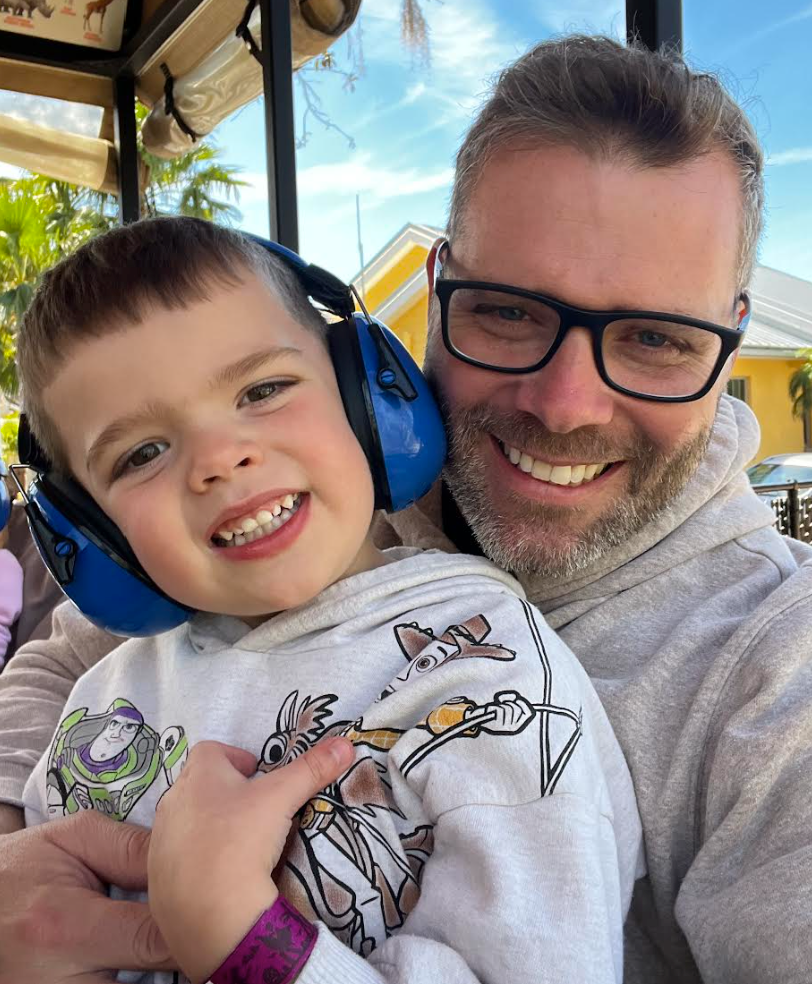
VizyPlan was built by an autism dad for the predictability layer of this. Visible transitions, social stories for tough situations, and routine recovery anchors so the nervous system has somewhere to land after the wave.
Download VizyPlan and start your 7-day free trial today. Build the predictability layer your child's nervous system needs. If it helps, keep going for $6.99/month or $59.99/year.
VizyPlan was built by an autism dad who needed something that did not exist. Start your free trial.