Daily Routines

Quiet Time that your child can actually settle into.

Everyone in the house needs twenty minutes of nothing, including your child, especially your child. Nobody knows how to start it.

Free 7-day trial · No email or credit card to start · Built by an autism dad and a licensed SLP

Why it helps

Why a visual schedule helps with quiet time

A dysregulated child cannot invent a calming activity on the spot, which is why go rest in your room usually fails. A visual quiet time menu offers the options in advance, so your child chooses instead of being asked to generate.

What usually goes wrong

  • Rest is an instruction with no actions attached to it.
  • A child who is already overloaded cannot pick an activity.
  • Without a visible end, quiet time feels like a punishment.

A picture-first schedule answers the same three questions every time: what is happening now, what happens next, and when it ends. Children who can see those answers stop needing to ask, and the prompting that usually falls to you moves onto the schedule instead.

The routine

What the schedule can look like

A starting point for quiet time. Use it as written, or cut it down to the steps your child actually needs. Fewer steps that get finished beat a complete list that stalls.

  1. 1 Look at the quiet time card
  2. 2 Pick one activity from the menu
  3. 3 Set the visual timer
  4. 4 Go to the quiet spot
  5. 5 Do the chosen activity
  6. 6 Come out when the timer ends
  7. 7 Say one word about how your body feels now

Tip: keep the same order every time. The order is what your child learns, more than the individual steps.

How VizyPlan helps

A schedule your child is actually in.

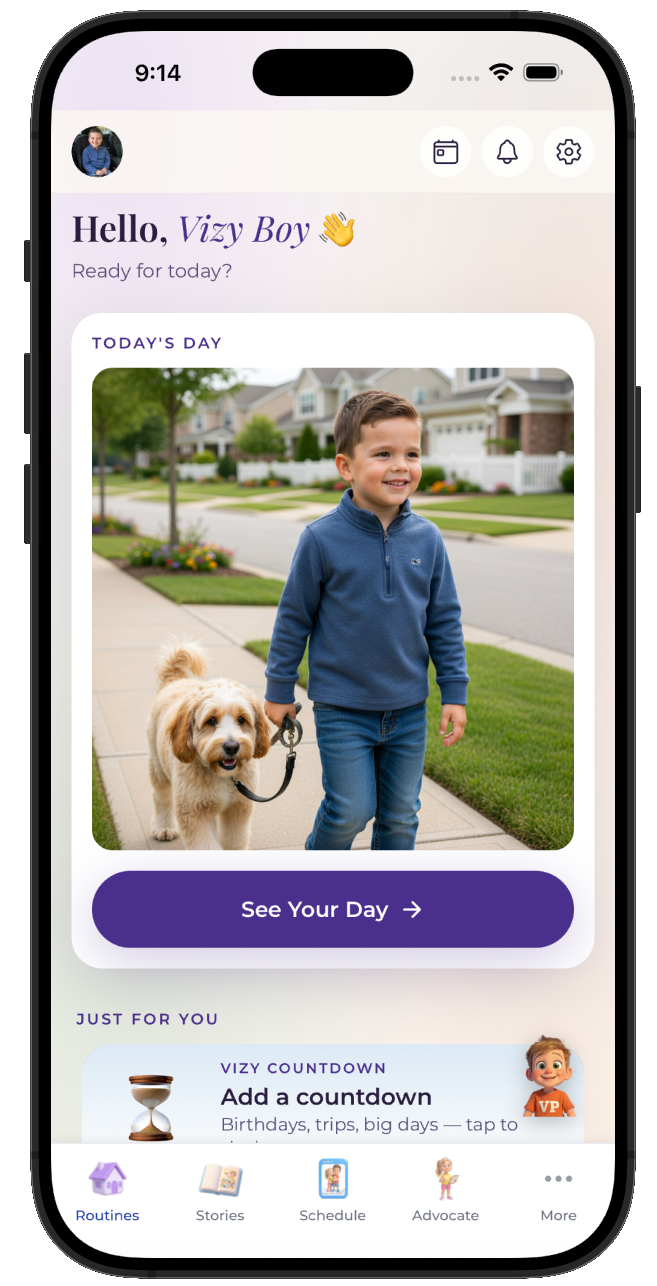
Clip art shows a child. VizyPlan generates images of your child, doing the step, in a routine you built in a few minutes.

01 · Personalized

Every step, with their own face in it.

Add one reference photo and VizyPlan generates an image of your child doing each step of quiet time. Children attend longer to images of themselves than to generic icons, which is the whole reason the personalization exists.
  • Works for pre-readers, gestalt language processors, and AAC users
  • Reference photos are never used to train public AI models
  • Print any routine as picture cards for low-tech settings
A VizyPlan visual schedule for quiet time
02 · Prepared

A social story before the moment hits.

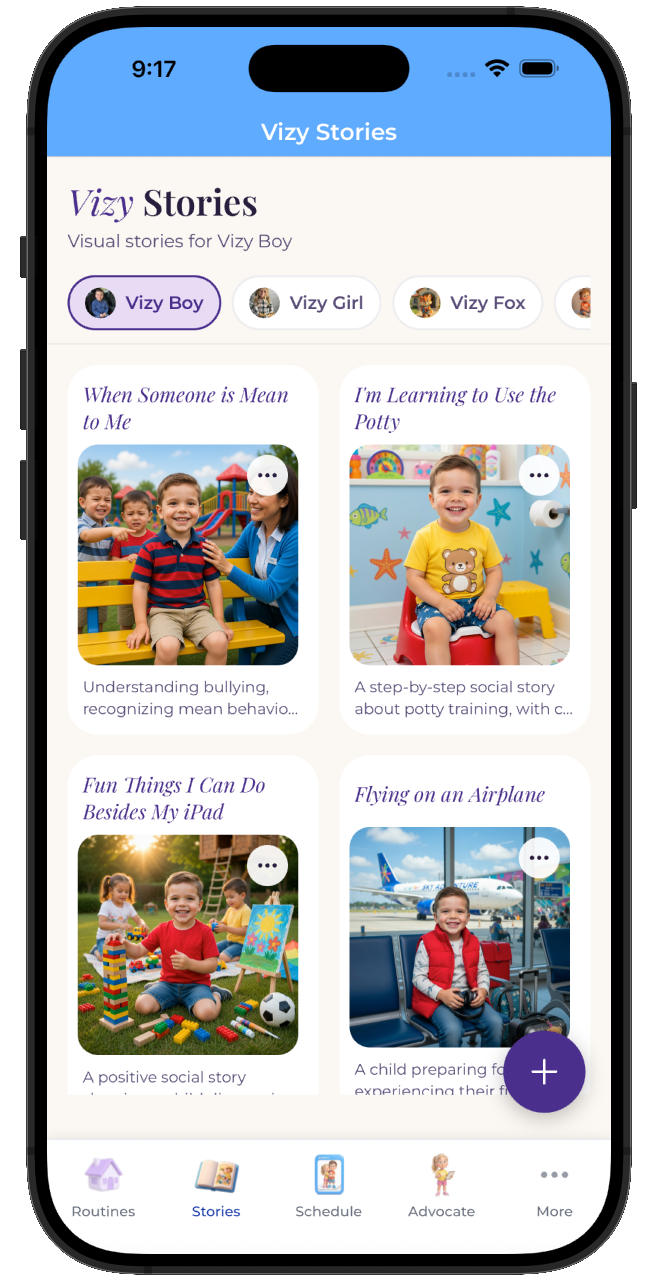
One tap turns quiet time into a picture-by-picture story your child reads at home, days before it happens. A child who has already seen it arrives prepared rather than surprised.
  • Read it as many times as your child wants beforehand
  • Share it with the other parent, a grandparent, or a provider
  • Edit any page so the story matches your actual plan
A personalized social story preparing a child for quiet time
03 · Regulated

Timers and calm tools one tap away.

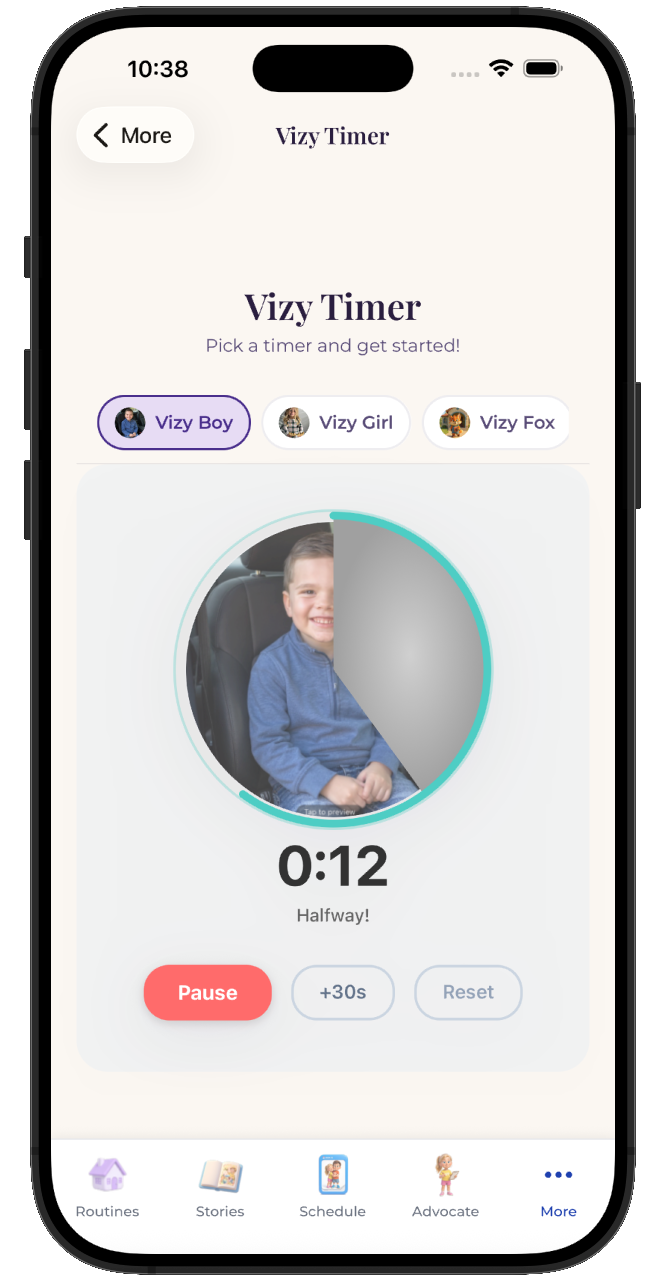
Most of the hard moments in quiet time are timing problems. A visual timer that depletes on screen makes the ending visible, and breathing and grounding tools are available from any screen when the plan goes sideways anyway.
  • Visual timers and countdowns for every step
  • Breathing, color, and grounding tools built in
  • Points and stickers for the steps your child finished
VizyPlan visual timer counting down a routine step

Make this schedule for your child.

Set up quiet time in about ten minutes, with images of your own child on every step.

$6.99/month after the free trial · Cancel anytime · Also at app.vizyplan.com

Common questions

About quiet time

How long should quiet time last?
Start with a length your child already tolerates, often ten to fifteen minutes, and extend it only after several successful days. A short successful block builds the habit faster than a long forced one.
Is quiet time a punishment?
It should never be framed as one. Quiet time works when it is presented as something the whole house does and something the child gets, not somewhere a child is sent for behavior.
What activities work best for quiet time?
Low-demand, repetitive, sensory-friendly options tend to work best, such as looking at books, coloring, weighted blanket time, or a breathing exercise. Put three or four on a menu so the choice is real but small.

VizyPlan supports routines and communication at home and school. It is not a medical device and does not diagnose or treat any condition. Talk to your child's care team about clinical questions.