
Medical and Health

Getting Blood Drawn with a plan for the hard minute.

A blood draw takes longer than a shot, involves more equipment, and asks your child to hold still while it happens. Knowing it is medically necessary does not make the waiting room any easier.

Free 7-day trial · No email or credit card to start · Built by an autism dad and a licensed SLP

Why it helps

Why a visual schedule helps with getting blood drawn

A blood draw is a long procedure by a child's standards, with a tourniquet, a needle, and a hold-still demand. Previewing every step and rehearsing the coping plan gives your child something to do during the minute that would otherwise be pure panic.

What usually goes wrong

  • Holding still for a full minute is a bigger ask than the needle itself.
  • The tourniquet and the alcohol smell start the fear before the draw begins.
  • Fasting requirements can mean arriving already dysregulated and hungry.

A picture-first schedule answers the same three questions every time: what is happening now, what happens next, and when it ends. Children who can see those answers stop needing to ask, and the prompting that usually falls to you moves onto the schedule instead.

The routine

What the schedule can look like

A starting point for a blood draw. Use it as written, or cut it down to the steps your child actually needs. Fewer steps that get finished beat a complete list that stalls.

  1. 1 Look at the blood draw story at home
  2. 2 Drink water beforehand unless fasting is required
  3. 3 Wear a short sleeve shirt
  4. 4 Ask about numbing cream at check in
  5. 5 Sit in the chair with the parent close
  6. 6 Arm out, tourniquet on
  7. 7 Look away and do the counting plan
  8. 8 Bandage on, snack right after, then the planned reward

Tip: keep the same order every time. The order is what your child learns, more than the individual steps.

How VizyPlan helps

A schedule your child is actually in.

Clip art shows a child. VizyPlan generates images of your child, doing the step, in a routine you built in a few minutes.

01 · Personalized

Every step, with their own face in it.

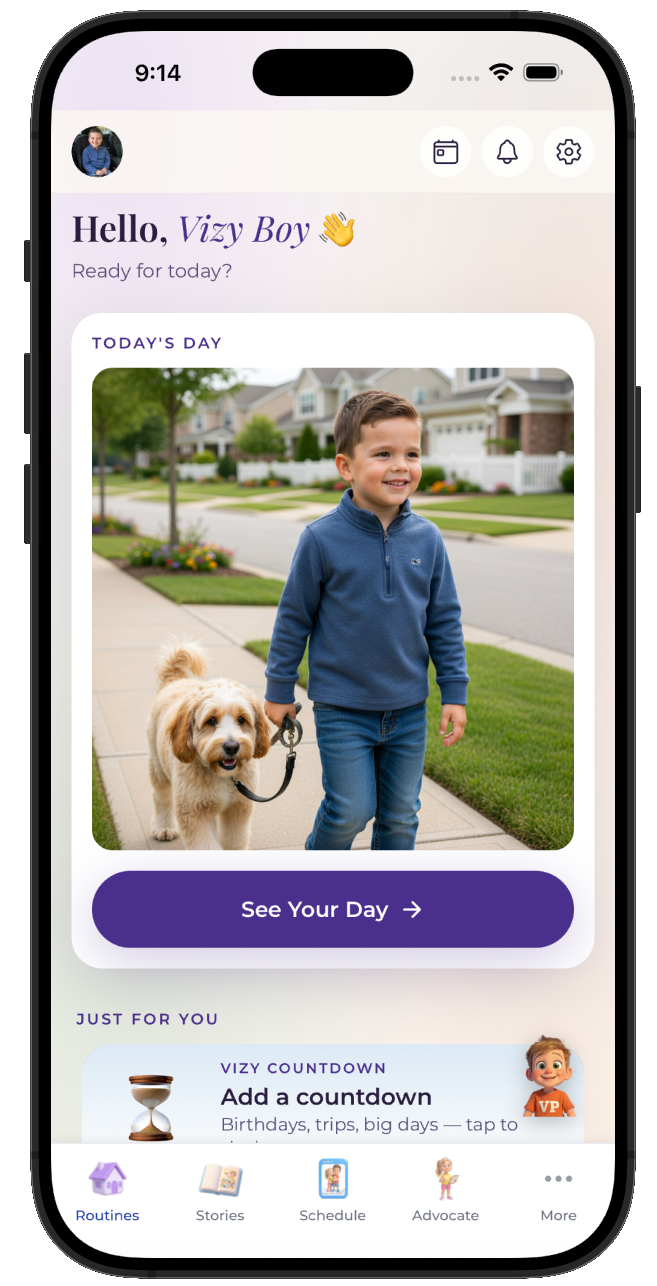
Add one reference photo and VizyPlan generates an image of your child doing each step of a blood draw. Children attend longer to images of themselves than to generic icons, which is the whole reason the personalization exists.
  • Works for pre-readers, gestalt language processors, and AAC users
  • Reference photos are never used to train public AI models
  • Print any routine as picture cards for low-tech settings
A VizyPlan visual schedule for a blood draw
02 · Prepared

A social story before the moment hits.

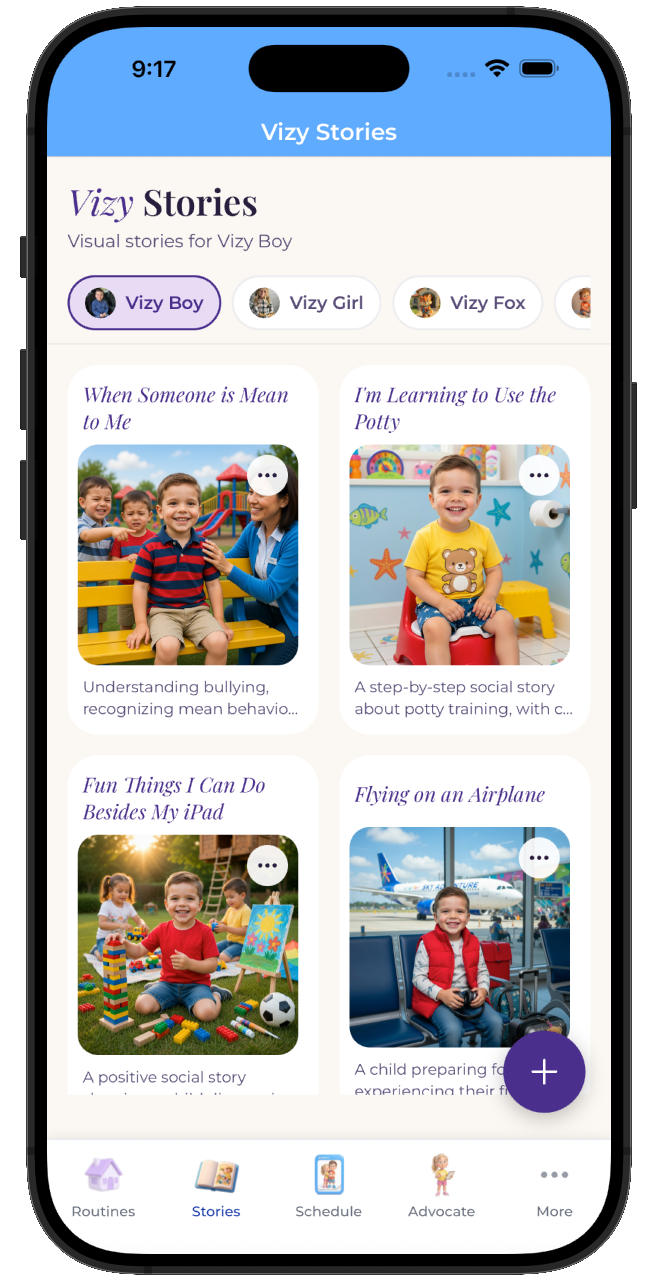
One tap turns a blood draw into a picture-by-picture story your child reads at home, days before it happens. A child who has already seen it arrives prepared rather than surprised.
  • Read it as many times as your child wants beforehand
  • Share it with the other parent, a grandparent, or a provider
  • Edit any page so the story matches your actual plan
A personalized social story preparing a child for a blood draw
03 · Regulated

Timers and calm tools one tap away.

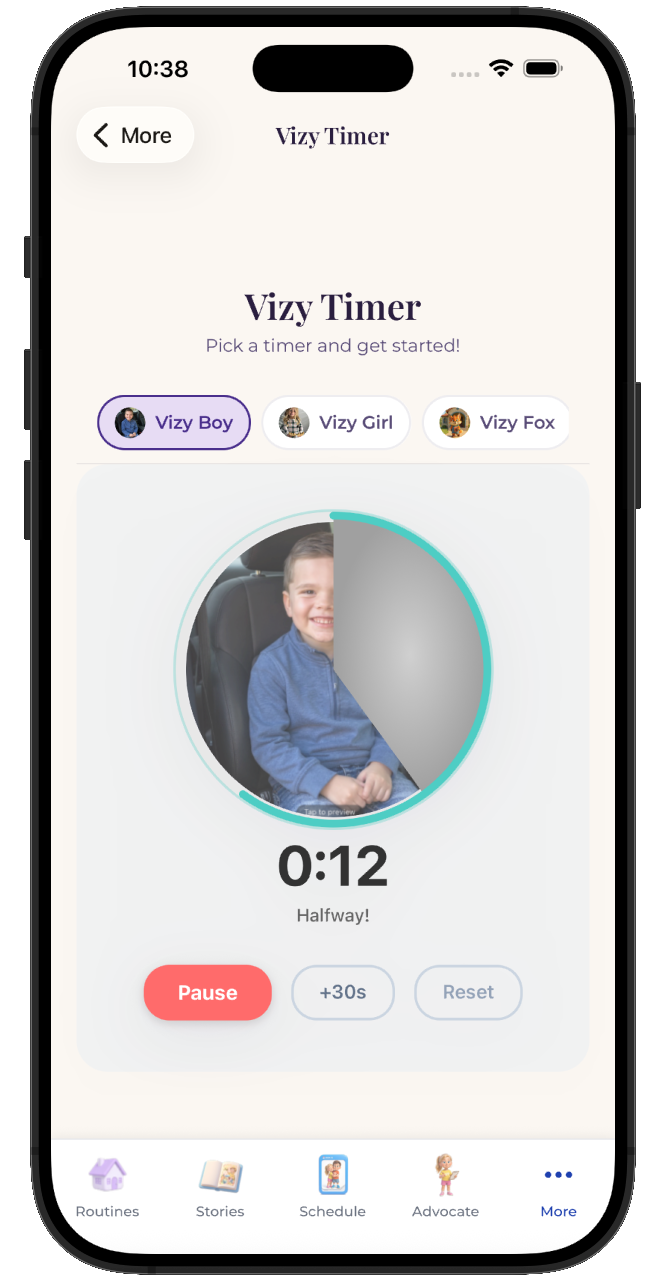
Most of the hard moments in a blood draw are timing problems. A visual timer that depletes on screen makes the ending visible, and breathing and grounding tools are available from any screen when the plan goes sideways anyway.
  • Visual timers and countdowns for every step
  • Breathing, color, and grounding tools built in
  • Points and stickers for the steps your child finished
VizyPlan visual timer counting down a routine step

Make this schedule for your child.

Set up a blood draw in about ten minutes, with images of your own child on every step.

$6.99/month after the free trial · Cancel anytime · Also at app.vizyplan.com

Common questions

About a blood draw

Can we use numbing cream before a blood draw?
Topical numbing cream is widely used and usually needs twenty to sixty minutes to work, so ask the lab or your prescriber ahead of the appointment. Many pediatric labs also offer a cold spray that works within seconds.
How do I keep my child still for the draw?
Comfort positioning on a parent's lap plus a job to focus on, such as counting or squeezing a stress ball with the other hand, works better than restraint. Tell the phlebotomist your plan before they start.
What if the first attempt fails?
Ask for the most experienced phlebotomist available, and set a limit in advance on how many attempts you will allow in one visit. Leaving and rescheduling protects your child's tolerance for the next appointment.

VizyPlan supports routines and communication at home and school. It is not a medical device and does not diagnose or treat any condition. Talk to your child's care team about clinical questions.