Vizy Timer

Getting Dressed in the Morning while there is still time to catch the bus.

It is 7:41 and your child has one sock on and no memory of the last eleven minutes. You have said hurry up so many times that the words have stopped meaning anything.

Free 7-day trial · No email or credit card to start · Built by an autism dad and a licensed SLP

Why it works here

Why a visual timer helps with getting dressed in the morning

Hurry up asks a child to speed up a process they cannot currently see the shape of. A timer paired with the getting-dressed sequence makes both the steps and the remaining time visible, which is what turns your voice from the engine of the morning into a backup.

You will recognize this if

  • Your child gets distracted between one garment and the next.
  • You are narrating the entire morning out loud and it is exhausting.
  • The delay is not refusal, your child genuinely loses the thread.
The setup

How to set it up for getting dressed in the morning

Takes about five minutes. Use it as written, or keep only the steps your family needs. A short setup that gets used beats a complete one that gets abandoned in week two.

  1. 1 Lay the clothes out in order the night before, in a visible line
  2. 2 Set one timer for the whole dressing block rather than one per garment
  3. 3 Place the timer at your child's eye level, not on a kitchen counter
  4. 4 Let the timer prompt instead of you for the first week
  5. 5 Keep the order of garments identical every day
  6. 6 Put whatever comes next, breakfast or shoes, in sight from the same spot
The mistake most families make

Adding your voice on top of the timer cancels most of the benefit, because your child goes back to waiting for the adult prompt rather than reading the clock.

In the app

Built into the routine, not bolted onto it.

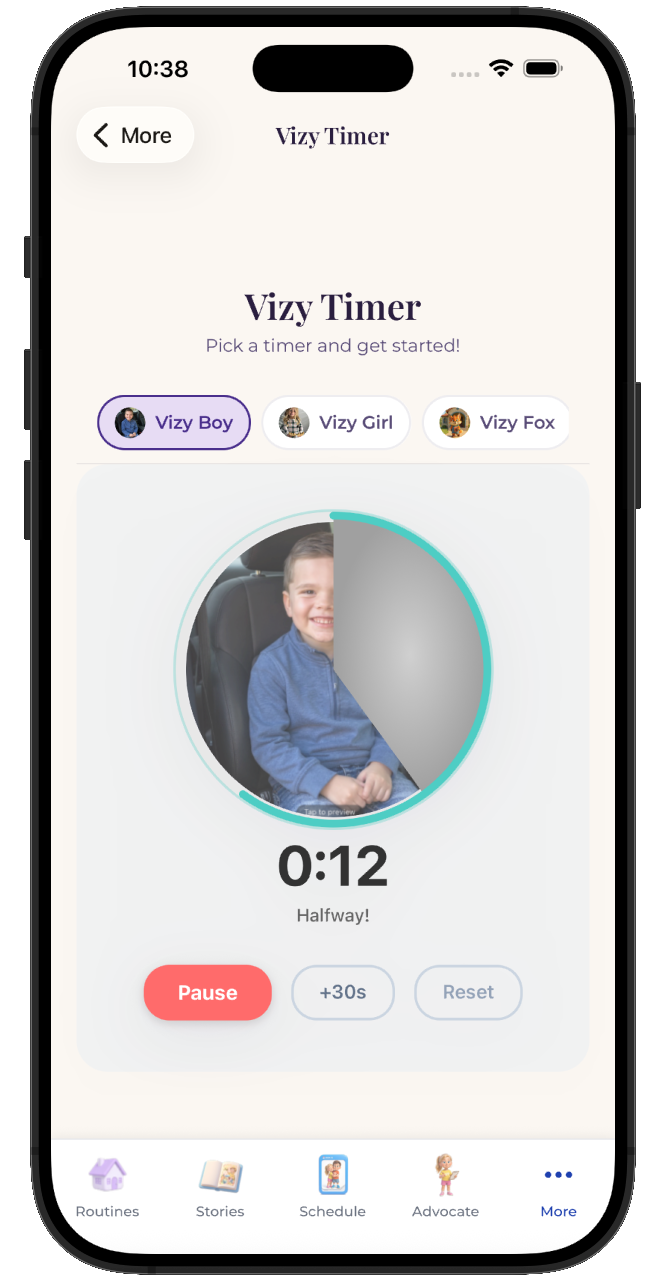
The Vizy Timer lives inside the same routine your child already follows, so getting dressed in the morning is a step with a visible length rather than a separate tool somebody has to remember to open.
  • Attach it to any step in any routine
  • Works for pre-readers, gestalt language processors, and AAC users
  • Same setup at home, at school, and in therapy
See the step-by-step guide →
The VizyPlan Vizy Timer set up for getting dressed in the morning

Set this up for your child.

Five minutes to build, and your child sees it every time getting dressed in the morning comes around.

$6.99/month after the free trial · Cancel anytime · Also at app.vizyplan.com

Common questions

About getting dressed in the morning

Should I use one timer or a timer per step?
One timer for the block plus a visible step sequence works better for most children. Multiple timers add pressure without adding clarity.
My child gets anxious watching time run out. What then?
Give more time rather than removing the timer, and set it so it usually ends with a margin. A timer that regularly runs out mid-task becomes a source of dread.
What if the delay is really about the clothes themselves?
Then no timer will fix it. Tactile sensitivity to seams, tags, and fabric is extremely common, and it needs solving at the closet rather than at the clock.

VizyPlan supports routines and communication at home and school. It is not a medical device and does not diagnose or treat any condition. Talk to your child's care team about clinical questions.