Sleep Challenges Beyond Bedtime for Neurodivergent Children
9 min read
Bedtime takes ninety minutes and contains roughly fourteen negotiations, because every step is a fresh opportunity to ask for something else.
Free 7-day trial · No email or credit card to start · Built by an autism dad and an autism mom SLP
Each undefined step in a bedtime routine is an opening for negotiation. A fixed visible sequence closes those openings, not by being stricter but by removing the question of what comes next, which is what most of the negotiating is actually about.
What the research saysBehavioral sleep programs for autistic children combining a consistent bedtime routine with visual cues have produced meaningful improvements in bedtime resistance and time taken to fall asleep.
Papadopoulos et al., Journal of Child Psychology and Psychiatry, 2022
Takes about five minutes. Use it as written, or keep only the steps your family needs. A short setup that gets used beats a complete one that gets abandoned in week two.
Leaving the predictable requests off the map guarantees they arrive as interruptions. Building them in as steps removes their power to extend the routine.
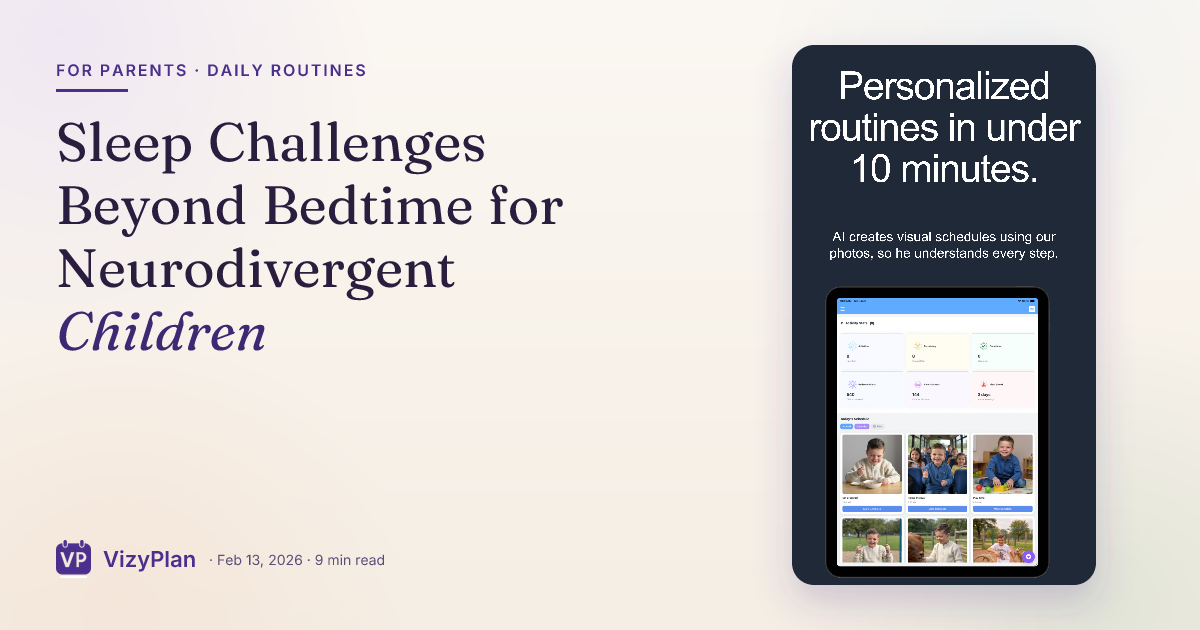
The Map Your Day lives inside the same routine your child already follows, so mapping bedtime as a sequence is a step with a visible length rather than a separate tool somebody has to remember to open.
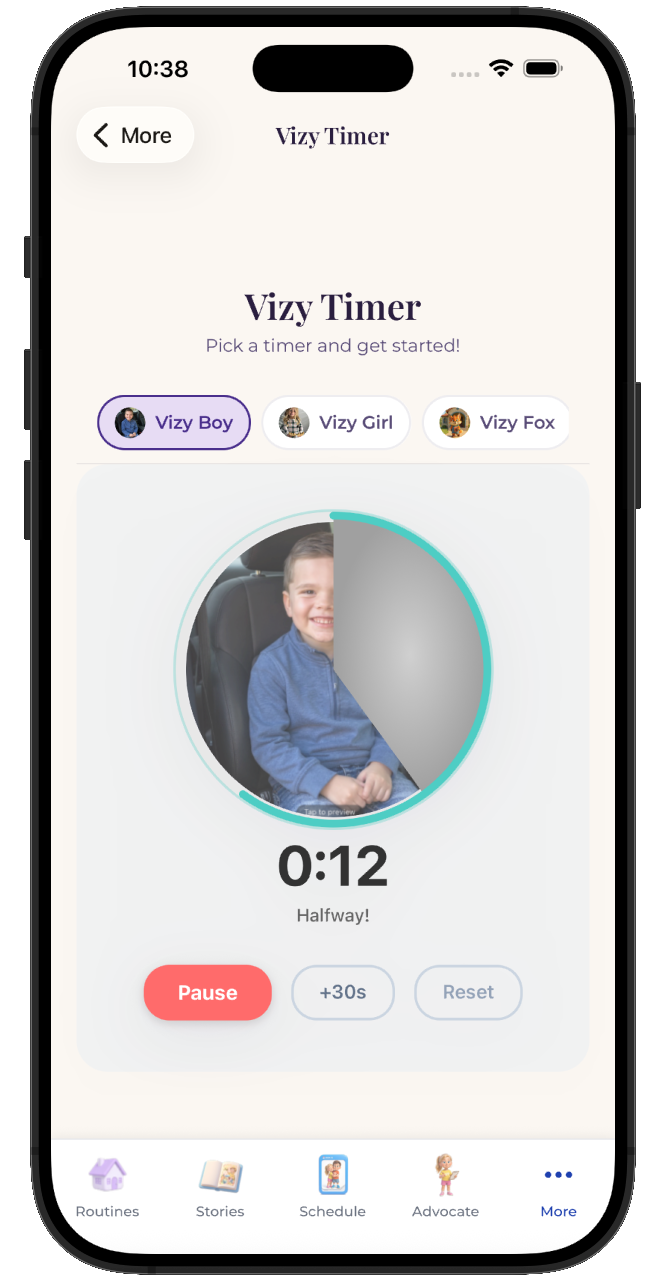
Five minutes to build, and your child sees it every time mapping bedtime as a sequence comes around.
$6.99/month after the free trial · Cancel anytime · Also at app.vizyplan.com
VizyPlan supports routines and communication at home and school. It is not a medical device and does not diagnose or treat any condition. Talk to your child's care team about clinical questions.