
Map Your Day

Mapping Mealtimes so eating is not also a surprise.

Your child asks what is for dinner from about two in the afternoon, and the answer determines the tone of the entire evening. Food is not a small variable in your house.

Free 7-day trial · No email or credit card to start · Built by an autism dad and a licensed SLP

Why it works here

Why a day map helps with mapping mealtimes

For a child with a restricted range of accepted foods, an unknown meal is a genuine source of anxiety through the whole day. Putting the actual meal on the map removes the uncertainty early, which is worth more than any negotiation at the table.

You will recognize this if

  • Your child asks about meals hours in advance.
  • An unexpected meal derails an otherwise fine evening.
  • The anxiety is about not knowing rather than about the food itself.
What the research says

A meta-analysis reported a mean prevalence of food selectivity in autism of around 63 percent, substantially higher than in typically developing comparison groups.

Prevalence of food selectivity and eating disorders in autism, 2025
The setup

How to set it up for mapping mealtimes

Takes about five minutes. Use it as written, or keep only the steps your family needs. A short setup that gets used beats a complete one that gets abandoned in week two.

  1. 1 Put the actual meal on the map in the morning, with a photo
  2. 2 Keep a small rotating set of meals rather than constant variety
  3. 3 Show the safe food that will be available alongside anything new
  4. 4 Mark the meal as a step in the day so it has a position and a length
  5. 5 Change the map if the plan changes, rather than surprising your child
  6. 6 Keep new foods off the map until you have discussed them
The mistake most families make

Keeping the meal a surprise to avoid a preemptive refusal usually produces a larger refusal at the table, with less time to solve it.

In the app

Built into the routine, not bolted onto it.

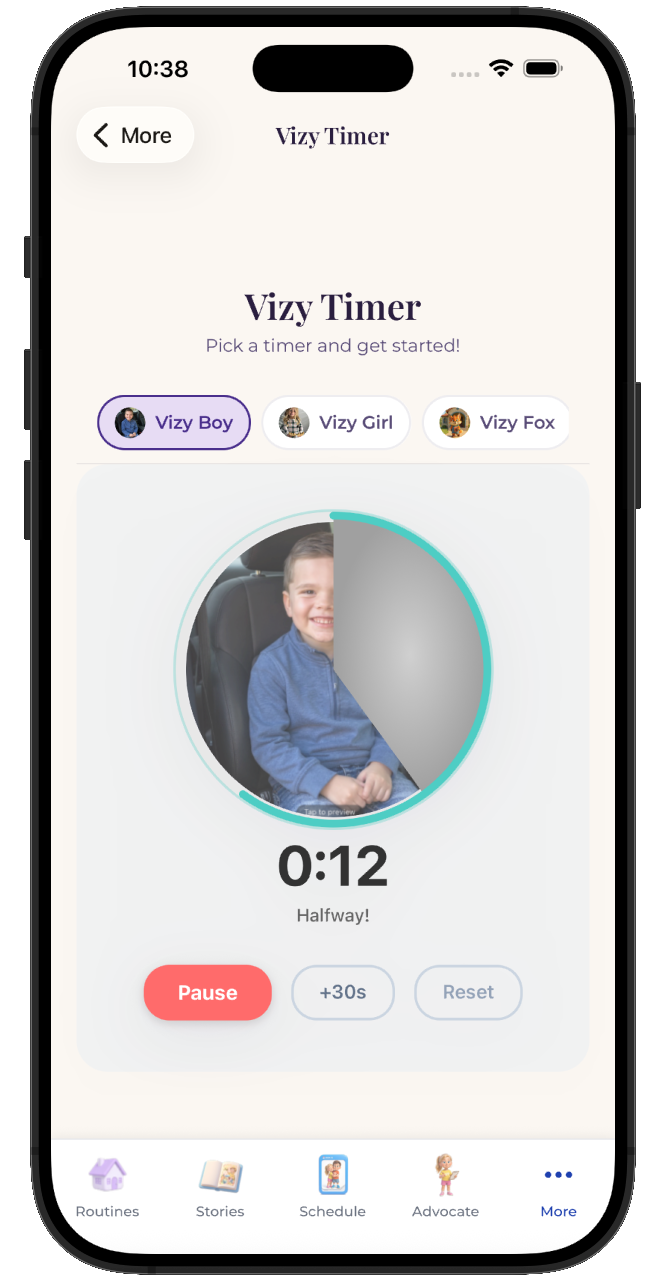
The Map Your Day lives inside the same routine your child already follows, so mapping mealtimes is a step with a visible length rather than a separate tool somebody has to remember to open.
  • Attach it to any step in any routine
  • Works for pre-readers, gestalt language processors, and AAC users
  • Same setup at home, at school, and in therapy
See the step-by-step guide →
The VizyPlan Map Your Day set up for mapping mealtimes

Set this up for your child.

Five minutes to build, and your child sees it every time mapping mealtimes comes around.

$6.99/month after the free trial · Cancel anytime · Also at app.vizyplan.com

Common questions

About mapping mealtimes

Does telling my child the meal in advance cause more refusal?
It moves the refusal earlier, which is usually an advantage. A refusal at nine in the morning can be solved, and one at six in the evening cannot.
Should new foods go on the map?
Only after you have talked about them, and always alongside a visible safe food. A new food appearing unannounced tends to end the meal.
How much meal variety is reasonable?
Less than most guidance suggests, particularly during a difficult period. A small reliable rotation reduces daily anxiety considerably.

VizyPlan supports routines and communication at home and school. It is not a medical device and does not diagnose or treat any condition. Talk to your child's care team about clinical questions.