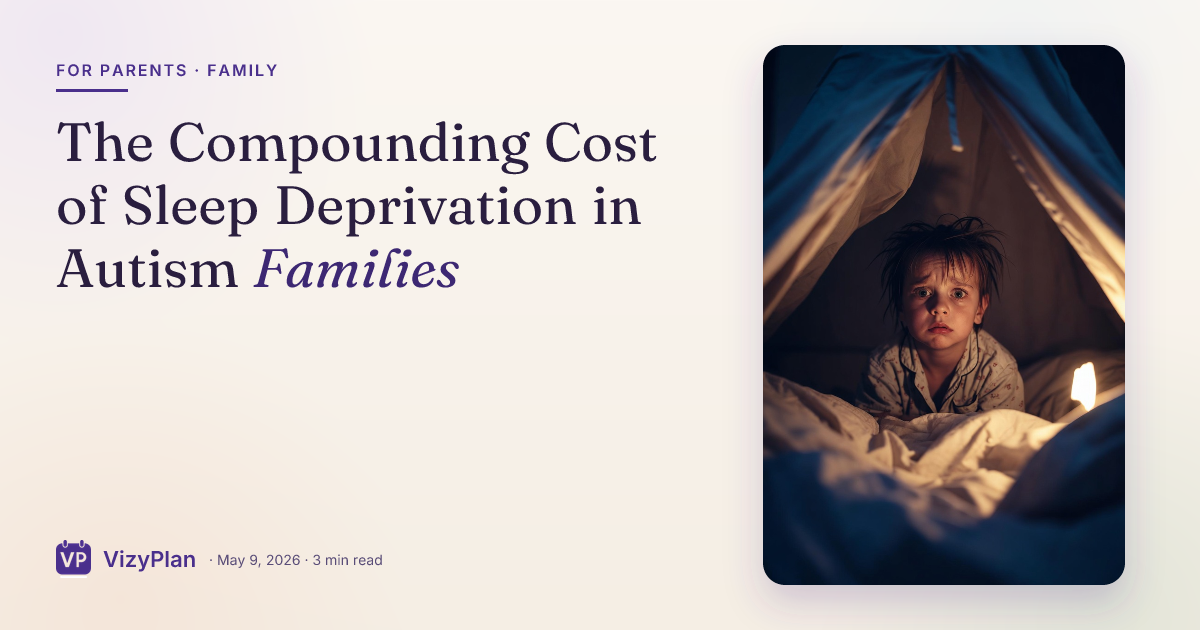
Most parents lose sleep for a few years. Sleep deprivation in autism families lasts a decade. Up to 80 percent of autistic children have a clinically significant sleep disorder, according to a 2019 study in Pediatrics, compared to roughly 30 percent of neurotypical children. The math is brutal. Two hours less per night across ten years is 7,300 hours of lost sleep. That is not a tired phase. That is a rewiring of what your body and your relationship can do.
The cost compounds in places no one warns you about. Immune function drops first. Then short term memory. Then patience, then libido, then the small generosities that hold a marriage together. Therapists call it parental burnout, but the parents living it call it something simpler. They call it running on fumes.
What Helps With Sleep Deprivation in Autism Families
Enjoying this article?
Get practical tips and insights delivered to your inbox — no spam, ever.
Three shifts produce more sleep for the household, in order of impact:
- Treat the child's sleep as a medical issue, not a parenting failure. Ask the pediatrician about melatonin dosing, iron levels, and a sleep study. Untreated sleep apnea is missed in roughly half of autistic kids who have it.
- Set a non negotiable wind down window. Same lights, same sounds, same order, every night. Predictability lowers cortisol, which is the actual lock on your child's sleep.
- Build a tag team for the hardest hour. Whichever parent is less depleted that day takes the bedtime sequence. The other parent eats food. Trade. Repeat.
For more practical bedtime structure, read our guide on bedtime routines for autistic kids. And if you need a visible nightly sequence your child can follow without you in the room, VizyPlan builds the visual bedtime routine that runs on autopilot.