
The phone call comes and your world stops. Someone your child loves has died. In the hours that follow, you are drowning in logistics, grief, and the impossible question every neurodivergent parent faces in crisis: how do I explain this to my child?
Your child processes the world differently on a normal Tuesday. Death is not a normal Tuesday. It is the most abstract, permanent, confusing concept a human being can encounter, and you are about to explain it to a child whose brain thrives on concrete thinking, predictable routines, and the reassurance that things stay the same.
If you are reading this in the middle of that moment, here is what you need to know first: there is no perfect way to do this. But there are ways that work better for neurodivergent children, and they are different from what most grief resources will tell you.
Why Grief Is Different for Neurodivergent Children
Grief is hard for everyone. For neurodivergent children, it is hard in specific, predictable ways that most bereavement resources do not address.
Concrete Thinking Meets an Abstract Concept
Death is inherently abstract. The person was here. Now they are not. They are never coming back. For a child who thinks in concrete, literal terms, this concept can be genuinely incomprehensible. Research on theory of mind in autism confirms that understanding invisible, permanent states that cannot be directly observed is one of the core cognitive challenges autistic children face.
Your child may ask "But where did Grandma go?" not because they did not hear you, but because "gone forever" does not compute the way "gone to the store" does. They may ask the same question repeatedly for weeks, not because they forgot the answer, but because their brain keeps trying to make the concept fit into a framework that has no slot for permanent absence.
Alexithymia Blocks Emotional Expression
Research estimates that approximately 50% of autistic individuals experience alexithymia, the difficulty identifying, describing, and processing emotions, compared to roughly 5% of the general population. A 2019 meta-analysis by Kinnaird and colleagues confirmed this striking prevalence.
This means your child may be feeling grief intensely while having no language for what is happening inside their body. They might feel a tightness in their chest, a heaviness in their stomach, or an overwhelming urge to scream, but they cannot name that as sadness. Without the ability to identify and express the emotion, grief has nowhere to go. It comes out sideways, through meltdowns, regression, behavior changes, or what looks from the outside like not caring at all.
Routine Disruption Compounds the Loss
When someone in the family dies, routines collapse. People come and go from the house at unusual times. Meals happen at random. Parents are distracted, crying, on the phone. The normal schedule disappears entirely, sometimes for days or weeks.
For a child who depends on predictable routines to feel safe, this is a double loss. They have lost a person they love AND they have lost the structure that helps them navigate the world. Researchers describe this as "loss on loss," where the secondary disruptions (changes to household dynamics, altered schedules, unfamiliar visitors) compound the primary grief in ways that are unique to neurodivergent children.
Sensory Overwhelm at the Worst Time
Funerals, wakes, and memorial services are sensory nightmares. Crowded rooms full of unfamiliar people. People crying loudly. Hugging from relatives the child barely knows. Unfamiliar clothing that feels wrong. Strong smells from flowers. The echoing acoustics of a church or funeral home. Cold, hard pews. Standing and sitting at unpredictable intervals.
Every one of these sensory challenges exists in an environment where social expectations demand quiet, stillness, and emotional composure. For a neurodivergent child, this is an impossible combination.
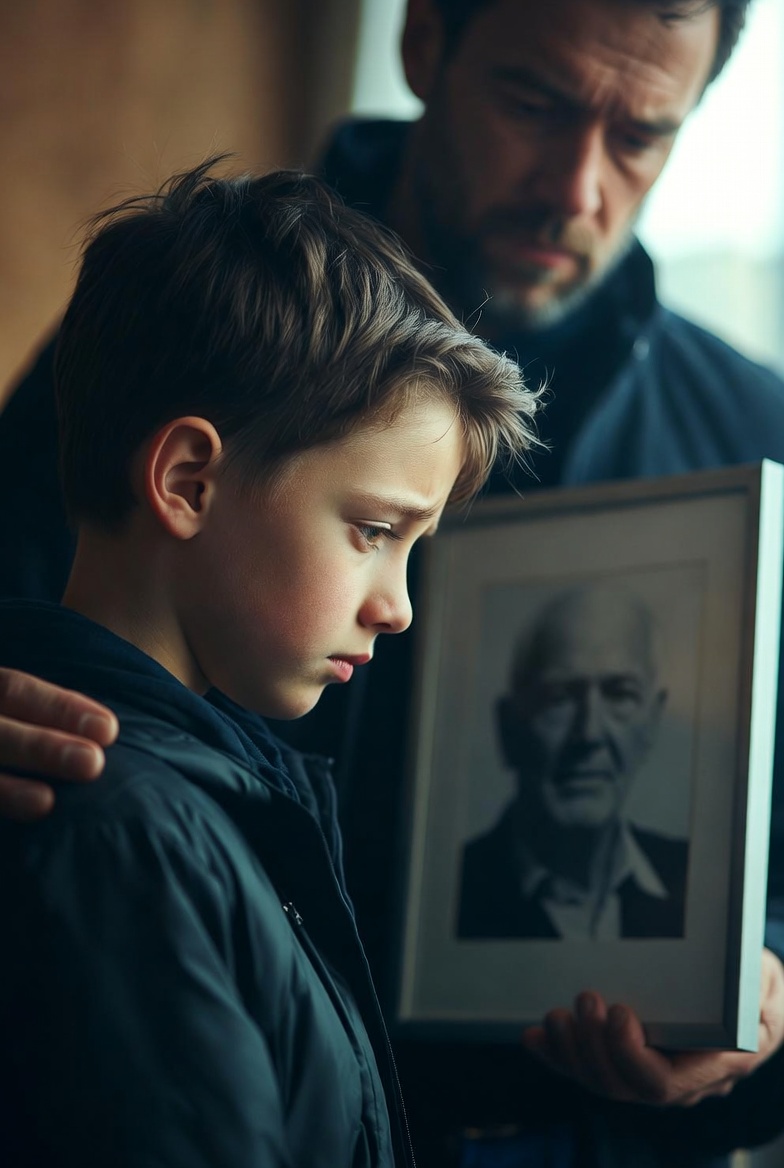
How to Tell Your Child Someone Has Died
The words you use matter enormously, and the rules are different for neurodivergent children.
Use Literal Language
This is the most important guidance in this entire article. Do not use euphemisms. Neurodivergent children, especially autistic children, process language literally. Common phrases that adults use to soften death create genuine confusion and sometimes fear.
Do not say:
- "We lost Grandpa." (Your child may want to go find him.)
- "Grandma passed away." (Passed where? Away to where?)
- "Uncle Mike is sleeping now." (Your child may become terrified of going to sleep.)
- "God took her." (Your child may become afraid of God or angry that someone took their person.)
- "She is in a better place." (If it is better, why is everyone crying? Can we visit?)
Instead say:
- "Grandpa died. That means his body stopped working and he is not alive anymore."
- "When someone dies, their body does not breathe, eat, sleep, or feel anything anymore. They cannot come back."
- "Grandma's body was very sick and the doctors could not fix it. She died."
The language feels blunt to adult ears. But for a concrete thinker, clarity is kindness. Vague language does not protect your child. It confuses them and forces them to fill in the gaps with their imagination, which is often worse than the truth.
Expect and Welcome Repeated Questions
Your child may ask "Is Grandpa really dead?" every day for weeks. This is not a sign that they do not understand. This is how concrete thinkers process permanence. Each time they ask, they are testing whether the answer has changed, because in their experience, most things that go away eventually come back.
Answer the same way each time, calmly and consistently. "Yes, Grandpa died. He is not coming back. I know that is sad." Consistency in your answer helps the permanence settle in over time. Getting frustrated or changing your wording signals that the truth might be flexible, which restarts the processing loop.
Use Visual Supports
Social stories are one of the most effective tools for helping neurodivergent children understand complex experiences. A social story about death can include:
- What happened (the person died)
- What that means in concrete terms (their body stopped working)
- What will change (they will not be at Sunday dinners, we will not visit their house anymore)
- What will stay the same (our family still lives here, you still go to school, your routine is still the same)
- What feelings are okay to have (sad, angry, confused, or even nothing at all)
- What the child can do when they feel those feelings
VizyPlan lets you build personalized social stories with AI-generated images of your child in familiar settings, making the concept feel concrete and connected to their actual life rather than abstract.
Preparing for the Funeral or Memorial
Not every neurodivergent child should attend a funeral. That is okay. But if you want to give your child the option, preparation is everything.
Preview Everything Visually
Show your child pictures of the funeral home or church. Explain what will happen in order: we will arrive, we will sit in a room with chairs, people will talk about the person who died, some people will cry, there may be music, and then we will leave. Use a visual sequence they can reference during the service.
If there will be an open casket, explain this concretely: "The person's body will be in a special box called a casket. They will look like they are sleeping, but they are not. Their body stopped working. Some people want to walk up and look at the body. You do not have to do that unless you want to."
Create a Sensory Survival Kit
Pack everything your child needs to manage the sensory environment:
- Noise-cancelling headphones or earplugs
- A fidget tool or comfort item
- Sunglasses if the lighting is harsh
- Comfortable clothes that look appropriate (negotiate this in advance, not the morning of)
- A snack in case the service is long
- A tablet or book for quiet distraction if needed
Have an Exit Plan
Before you arrive, identify where you will go if your child needs to leave. A car, an empty hallway, a quiet room. Designate one adult whose sole job is to be your child's support person, someone who can leave the service without disrupting it and take the child somewhere calm.
Tell your child in advance: "If it feels like too much, we can leave. You just tell me or squeeze my hand and we will go outside." Knowing the escape exists often reduces the need to use it.
Consider Alternatives
If a full funeral service is too overwhelming, your child can participate in grief in other ways:
- Visiting the grave or memorial site later, when it is quiet
- Drawing a picture or writing a letter to the person who died
- Lighting a candle at home
- Looking at photos together and sharing memories
- Planting something in the person's honor
Participation does not have to look traditional to be meaningful.
Understanding Atypical Grief Responses
This section may be the most important for your own wellbeing as a parent, because neurodivergent grief often looks nothing like what you expect.
Delayed Grief
Your child may show no visible reaction for days, weeks, or even months after the death. This does not mean they do not care. Autistic children in particular may need extended processing time before the emotional weight arrives. Research on bereavement in autism describes delayed grief as one of the most common and most misunderstood responses.
The grief may surface suddenly and intensely, triggered by something seemingly unrelated: a song, a smell, arriving at a place the person used to be, or a change in routine that was previously anchored by the person who died. When it arrives late, it can catch everyone off guard, including the child.
Enjoying this article?
Get practical tips and insights delivered to your inbox — no spam, ever.
Grief Through Behavior, Not Words
A child who cannot name their grief may express it through:
- Increased meltdowns or emotional outbursts
- Regression in previously mastered skills (toileting accidents, loss of independence)
- Changes in sleep patterns or increased sleep difficulties
- Increased stimming (this is a healthy coping mechanism and should not be discouraged)
- Withdrawal from activities they previously enjoyed
- Physical complaints: stomach aches, headaches, fatigue
- Refusing food or changes in eating patterns
- Increased rigidity around routines and rules
These are not behavior problems. They are grief expressed through the only channels available to a child who cannot articulate what they feel.
Seeming "Unaffected"
Some neurodivergent children respond to news of death with apparent indifference. They may return to playing immediately, ask a factual question ("What will happen to their house?"), or change the subject entirely. This can be shocking and painful for grieving family members.
This response does not mean your child lacks empathy or does not care. It may mean they are processing the information cognitively before the emotional response arrives. It may mean they do not yet understand the permanence. It may mean the emotional response is happening internally but they cannot express it externally. Or it may mean they need time.
Do not force a visible grief response. Do not say "Do you not feel sad?" or "Do you understand what happened?" Simply keep the door open: "I feel sad about Grandpa. If you feel sad too, or any other way, you can always tell me."
Perseverative Questions About Death
Some children will become intensely focused on the mechanics of death. How does a body stop working? What happens to a body underground? Can it happen to other people? Can it happen to you? Can it happen to me?
These questions can feel morbid or upsetting, but they are often your child's way of trying to build a mental model for something they have never encountered. Answer honestly, age-appropriately, and repeatedly. If the questions are causing the child visible distress rather than serving an information-gathering function, gently redirect: "I have answered that question the best I can. Let us do something that helps us feel calm right now."
Maintaining Routine When Everything Falls Apart
When your family is in crisis, routine feels like the last priority. It is actually the first.
Keep the Anchors
You cannot maintain a perfect schedule while planning a funeral and processing your own grief. You do not need to. Focus on the anchor points: the predictable moments that bookend your child's day.
- Morning routine stays the same, even if abbreviated
- Meals happen at approximately the same times
- Bedtime routine stays the same, even if bedtime itself shifts slightly
- School attendance continues if possible (school provides structure and normalcy)
Between the anchors, let the middle be flexible. Your child can handle uncertainty in the gaps if the edges hold.
Use Visual Schedules to Replace Verbal Explanations
You are exhausted. You are grieving. You do not have the bandwidth to explain the plan for the day seventeen times. A visual schedule does this for you. Post it where your child can see it. Update it as needed. Let the schedule be the authority so you do not have to narrate every transition.
VizyPlan lets you build and adjust visual routines quickly, which matters when your days are unpredictable and your energy is low. A five-minute schedule update on the app can save hours of anxiety for your child and you.
Prepare for Household Changes
If the person who died was part of your child's regular routine (a grandparent who watched them after school, a parent in a co-parenting arrangement, a sibling), the structural change is enormous. Address this directly:
- "Grandma used to pick you up on Tuesdays. Now Aunt Sarah will pick you up on Tuesdays."
- "Dad is not going to be at dinner anymore. We will still eat dinner at the same time, at the same table."
- Use a first-then board to show the new arrangement visually.
The more explicitly you name what is changing and what is staying the same, the less your child's brain has to guess, and guessing is where anxiety lives.
ADHD and Grief: A Different Pattern
While autistic grief tends toward delay and internalization, ADHD grief often shows up differently.
Intensity and Impulsivity
Children with ADHD may experience grief in sudden, intense waves that arrive without warning and feel disproportionate to the trigger. They may be playing happily one moment and sobbing the next. This emotional intensity is consistent with the emotional dysregulation that characterizes ADHD, but it can be alarming during bereavement.
Difficulty Sustaining Focus on Grief
A child with ADHD may struggle to sit with grief for extended periods. Their brain naturally seeks stimulation and novelty, which means they may cycle rapidly between visible sadness and completely unrelated activities. This is not shallow grief. It is grief filtered through a brain that cannot sustain attention on a single emotional state.
Impulsive Expression
A child with ADHD may say things about the death that sound inappropriate: "Can I have Grandpa's watch now?" or "Does this mean we do not have to go to his house anymore?" These are not signs of callousness. They are impulsive verbalizations of thoughts that a neurotypical child might think but filter. Respond without judgment: "We can talk about that later. Right now, let us focus on how we are feeling."
When to Seek Professional Support
Grief is a normal response to loss, and most children, including neurodivergent children, will process it over time without professional intervention. But some signs suggest grief has become complicated and help is needed.
Watch For
- Grief that intensifies rather than gradually eases after several months
- Persistent refusal to acknowledge the death (different from delayed processing)
- Talk of wanting to die or join the person who died
- Complete withdrawal from all activities and relationships
- Significant regression that does not begin to resolve
- Self-harm or increase in dangerous behaviors
- Persistent sleep disruption beyond the first few weeks
- Inability to function at school or home after the initial crisis period
Finding the Right Support
Look for a therapist who has experience with both grief and neurodivergent children. Play therapy is particularly effective for younger neurodivergent children processing loss, as it allows grief expression without requiring verbal articulation. For older children, adapted CBT can help with anxiety that develops around death and loss.
Research in this area is remarkably scarce. A 2024 systematic review by Bonin and colleagues found that only six studies worldwide met inclusion criteria for grief support specifically for children with autism or intellectual disabilities. This means most therapists are working without a well-established evidence base, making it even more important to find someone who understands your child's neurotype. Our guide on finding the right therapist can help you evaluate potential providers.
Talking About Your Own Grief
Your child is watching you. This is true always, and it is especially true now.
Many parents try to hide their grief to protect their child. For neurodivergent children, this backfires. Your child can sense that something is wrong. If they cannot see evidence of what is wrong, they may conclude that the wrongness is about them.
Instead, name your feelings in simple, concrete terms:
- "I am crying because I am sad about Grandma. Crying is one way our body shows sadness."
- "I feel tired today because grief makes your body tired. I am going to rest for a little while."
- "I miss Grandpa. Missing someone means you wish they were still here."
This models emotional language for a child who may not have their own. It also normalizes grief as something that happens to everyone, not something to be afraid of.
You Cannot Grieve Wrong, and Neither Can Your Child
There is no timeline for grief. There is no correct way to feel. Your child may cry for weeks or may never cry at all. They may ask about death constantly or never mention it again. They may seem fine for months and then fall apart when a holiday arrives and the person is not there.
All of it is normal. All of it is grief doing what grief does in a brain that processes the world differently.
Your job is not to make the grief go away. It is to hold the structure steady while the ground shakes. To keep answering the same question with the same patience. To let your child stim and withdraw and rage and go quiet without interpreting any of it as wrong. To show up, even in your own grief, and say "I am here. I am sad too. And we are going to be okay."
That is enough. You are enough. Even now.
Download VizyPlan and start your 7-day free trial today. Build social stories that help your child understand death and funerals with AI-generated visuals they recognize, maintain visual routines during the chaos of family crisis, track emotional patterns as your child processes grief over time, and give your family the predictability that holds everything together when nothing else can. Just $9.99/month after your trial, no credit card required upfront.